



Above the Waterline
Most decisions are holes you can patch and keep sailing. The job is drawing the line clearly enough that nobody has to ask.
I learned the waterline at Go Nimbly.
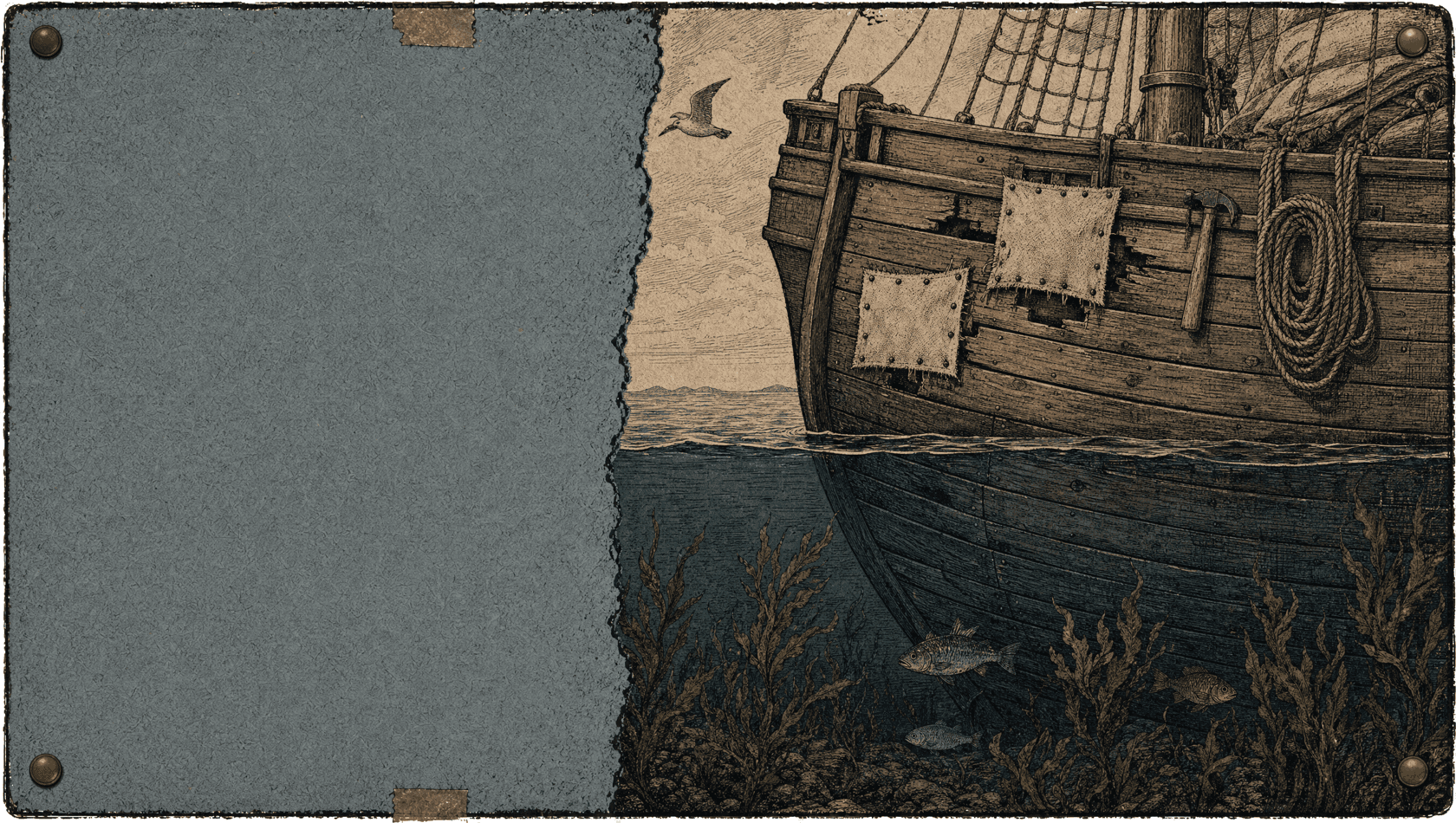
It came to us through the operating-system thinking in Brave New Work, and we wrote it into the playbook we used with clients. Picture the company as a ship. A hole above the waterline lets in some spray, and you patch it and keep sailing. A hole below the waterline sinks the boat. Most decisions belong to the first group, and the job is to say clearly which ones do, then let people make those calls without asking anyone.
I understood the idea well before I lived it. For a long time I tried to scale my team from the top down. The important decisions came through me, and so did plenty of unimportant ones, because nobody had told the team where the line was. Every hire added questions, and the questions came to my desk. Growth meant a longer line outside my door.
What changed it was distributing decisions to the far end of the organization, to the people closest to the customer and the work. Once they knew which calls were theirs, the scale I'd been trying to push down from the top started coming up from the ground. People moved faster than I could have approved, and the decisions were better, because they had context I would never have had.
Now I use the waterline every time I prioritize, and the most useful part has turned out to be the test it gives me. If I'm making the same call twice, or doing the same work twice, something is off with the clarity of the line. The second time someone brings me a decision I've already made, that's a sign I made the decision without drawing the line. The fix is to draw it so the next person can see it, and answering faster doesn't do that.
If I'm making the same call twice, or doing the same work twice, something is off with the clarity of the line.
Repetition is easy to miss because it feels like being helpful. You get asked, you know the answer, you give it. But each repeat is a decision living in my head when it should be living in the organization. When I notice I'm the bottleneck on something I've already decided, I go back and write down the line.
The line also moves. A call that would sink a small company can be a minor patch at a big one, and a call that was harmless last year can be dangerous once you've made promises to customers. So I keep redrawing the line as the ship changes, and the repeats tell me where it needs to go next.